Contact Us
Woodworm is the generic term for wood-boring larvae that use wood as their habitat. Across UK properties, woodworm is incredibly common – particularly in older structures that use untreated timber.
It’s critical that woodworm is detected early, as without treatment, the wood can become incredibly brittle, leading to structural damage and costly repair. This is particularly relevant if you’re purchasing a property – for which we recommend a pre-purchase survey from one of our PCA accredited surveyors.
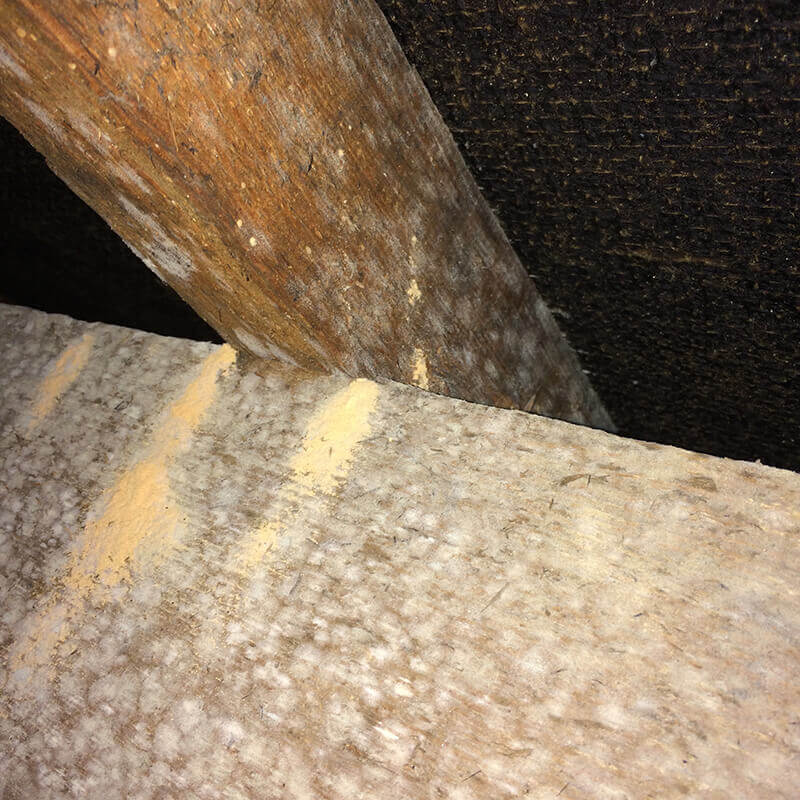
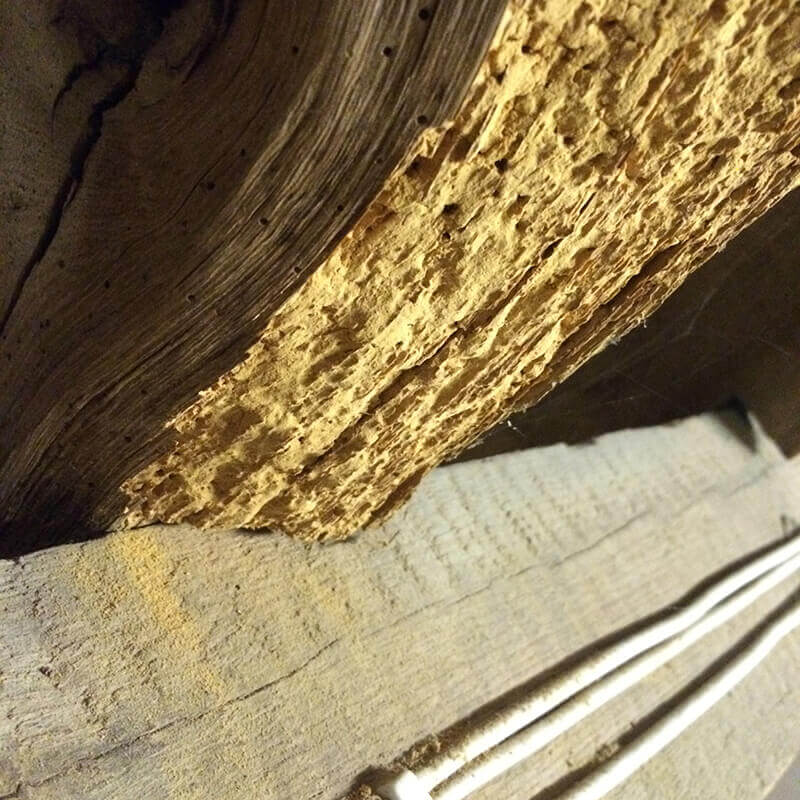
Some key signs to look out for include frass trails and sawdust, alongside small holes littered across the wood.
As there are many kinds of woodworm, it’s vital to get a professional timber survey to assess which kind of infestation is taking place so appropriate treatment can be applied.
Contact our timber treatment experts today to find out more.
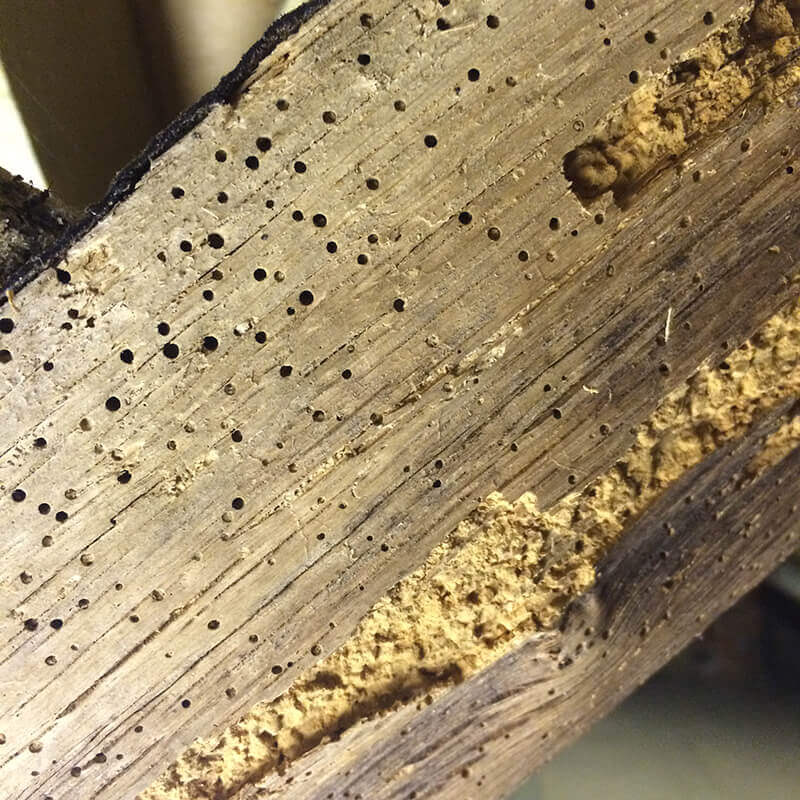
Adult beetles lay eggs on suitable timber. The eggs turn into larvae which spend 3-5 years eating/burrowing their way through the timber which they inhabit, deriving nutrition and water from the wood. When ready they pupate, chew their way to the surface and emerge from the wood leaving the signature emergence/exit holes.
The emergence period is generally between March/April and September, at which time insects can sometimes be seen on the surface of the wood or flying through the air in a roof space. When the insects emerge they leave a trail or pile of finely chewed wood (frass) which looks like fine saw dust. The presence of this frass is an indicator of current ongoing activity.


Evidence of woodworm and Deathwatch beetle is often found in older properties during building surveys. Below is a description of the species which are most commonly referred to in building survey reports. The correct identification of the type of insect that has attacked the timber and whether it is active is a prerequisite of proper treatment. In many cases, there may be no justification for chemical woodworm treatment.
Specialist timber surveys should be carried out by a qualified timber specialist with a minimum of a CSRT (Certificated Surveyor in Remedial Treatments) qualification as required by the Property Care Association (PCA). All Biocraft South West surveyors have achieved the CSRT & CSSW qualification to carry out timber surveys.
Not all species of woodworm require treatment, however, even if a woodworm infestation is identified, it may not be necessary to treat it if the infestation has already died out. It is therefore important to be able to ascertain whether or not woodworm infestation is still active before you consider treatment. In some cases of severe infestation, it may be very obvious that the woodworm is still active, however, in other cases, further investigation may be required in order to determine whether or not the woodworm is still active. These investigations could include:
The presence of fresh bore dust (frass)
The presence of fresh bore dust adjacent to, or beneath, emergence holes can be a strong indication of active woodworm infestation.
The presence of live larvae in timber
The most reliable indication of an active infestation is the presence of live larvae, which may be found in timber that has been removed.
The presence of adult beetles
During the emergence period (generally spring/summer), it may be possible to identify live adult beetles. This is a positive sign of an active infestation.
The presence of new emergence holes
This can be monitored by the “paper test”, which involves lining paper being applied over the surface of timber in areas where active infestation is suspected. The paper can then be monitored periodically over several years: if an adult beetle emerges from the underlying timber, it will also cause a hole in the paper, indicating that the infestation is active.
If active woodworm is detected, then specialist treatment is necessary. The type and extent of the woodworm treatment required will be determined following a specialist timber survey.
The most common form of treatment is the coarse spray application of a preservative, although micro fogging woodworm treatment is available for inaccessible areas. Treatments should only be carried out by a trained operative in strict accordance with the PCA Code of Practice for Remedial Timber Treatment.
Biocraft South West use specially formulated preservatives that allow for the successful eradication of woodworm. To arrange a survey of your property or for further information contact us today. We cover Wiltshire, Somerset, Oxfordshire and Gloucestershire.