
Why Summer Is the Best Time to Treat Damp
For many homes in the UK, penetrating damp, rising damp, and condensation are an unfortunate reality during the colder months of the year.
Rain, snow, and low temperatures can all contribute to damp issues becoming more noticeable, largely because there is more moisture present in both the air and ground. When these problems appear to disappear during the summer and seem manageable the rest of the year, it can be tempting to assume there is nothing that needs treating.
However, summer and early autumn are the ideal times to arrange a damp survey and tackle the issue once and for all. The warmer, drier conditions make it easier to carry out inspections and remedial work before damp problems return with wetter weather.

The Damp Cycle: Why Damp seems worse in Winter.
If a damp issue only seems problematic during the winter months, the explanation is surprisingly simple: the damp itself doesn’t disappear during summer, only the visible signs of it.
Warmer temperatures, increased ventilation from open windows and longer periods of dry weather allow moisture to evaporate more quickly. As a result, damp patches, staining and musty odours often become less noticeable, leading many homeowners to believe the problem has resolved itself.
In reality, the underlying cause usually remains.
Common issues such as poor window seals, inadequate insulation and insufficient airflow can continue to create excess moisture within a property. Penetrating damp may also be caused by defective guttering, damaged roof coverings or deteriorating brickwork, while rising damp can occur when groundwater is drawn up through masonry because a Damp Proof Course (DPC) has failed or become bridged.
The summer months simply allow affected materials to dry out temporarily. If the source of the moisture is left untreated, the problem will return when wetter, colder conditions arrive. In many cases, the damp reappears more severely, particularly if the underlying defect has continued to worsen.
This is why it’s important to address damp issues before winter arrives. Early intervention can help prevent further damage and reduce repair costs in the long term.
What does it mean if my DPC is faulty or bridged?
Before answering that, it helps to understand what a DPC does.
A Damp Proof Course is a crucial part of a building’s structure. Installed at or near ground level, it acts as a waterproof barrier that prevents moisture from the ground travelling upwards through walls and into the property.
DPCs can be made from a variety of materials with slate, bitumen, and modern plastic membranes among the most common in the UK.
When a DPC becomes damaged, or is compromised by structural movement, it may lose its ability to prevent moisture penetration. This allows water from the ground to enter the masonry and contribute to rising damp.
A bridged DPC is slightly different. This occurs when external ground levels, paths, patios, flower beds, or additional structures are built above the level of the DPC without suitable waterproofing being installed. Moisture is then able to bypass the damp-proof barrier and enter the wall above it.
Because groundwater levels are often lower during periods of dry weather, the symptoms of a faulty or bridged DPC can be difficult to spot throughout the summer. Walls may appear perfectly dry.
Once wetter weather returns, however, moisture levels in the ground increase. If the DPC is no longer working correctly, water is then able to travel into the walls leading to the classic signs of rising damp, including:
- Tide marks
- Stained plaster
- Peeling paint
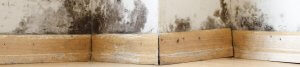
- Damaged skirting boards
Left untreated, these issues can result in both cosmetic and structural damage.
What can I do about damp if it disappears in the summer?
Although damp can be harder to identify during the summer months, most homeowners will already know where the symptoms tend to appear.
Perhaps you’ve noticed damp patches on a particular wall, or peeling wallpaper/paint in one room, or even a musty smell after periods of heavy rain. These observations can provide valuable information when investigating the source of a damp problem.
A professional damp surveyor can assess these areas, use specialist equipment to detect hidden moisture, and identify the underlying cause rather than simply treating the visible symptoms.
The advantage of arranging a survey during the summer is that remedial work can be planned and completing before damp conditions return. By taking action early, you ensure your property is protected through the wetter months ahead.
Ultimately, if damp seems to disappear every summer, it should not be viewed as a sign the problem has gone away. By investigating and treating the cause, you can avoid recurring damp issues and protect your property for the long-term.
Speak to Biocraft South West
If you have concerns over damp in your home or property, then the team at Biocraft South West are here to help. Rain or shine, our specialist surveyors can provide accurate diagnosis and treatment. Speak to our team today.