Contact Us
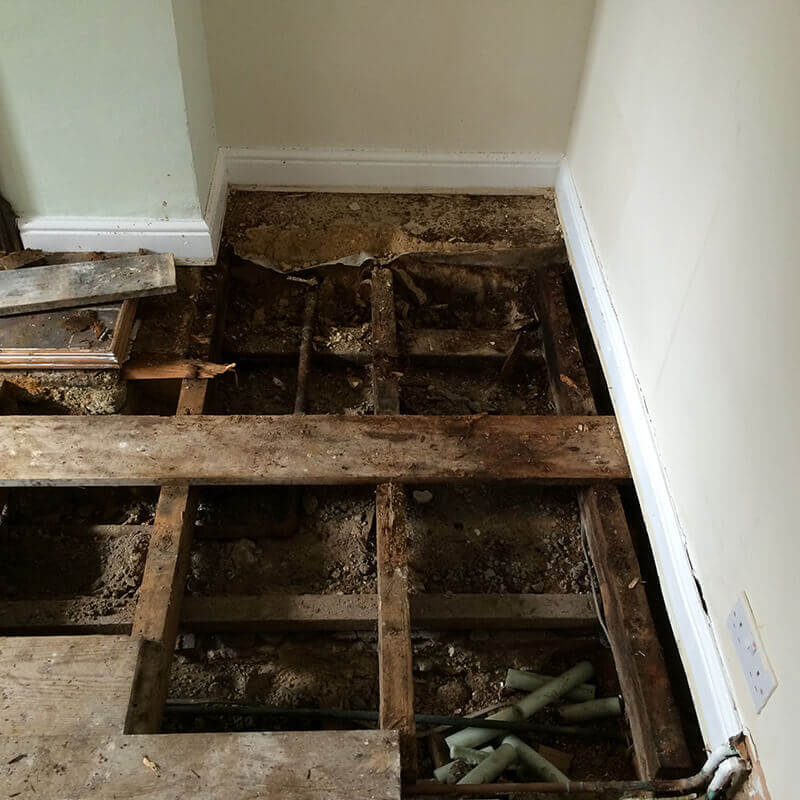
Amongst the classifications of timber decay, wet rot is the most common. Fortunately, however, it is typically less serious than dry rot.
Wet rot usually appears and stays confined to an area of wood that’s been exposed to damp for a long period of time. Wet rot can contain a number of fungus including Coniophora Puteana and Porio Vaillanti – However, this fungus typically does not spread. Each fungus has a unique appearance, and will require specific treatment to remove it.
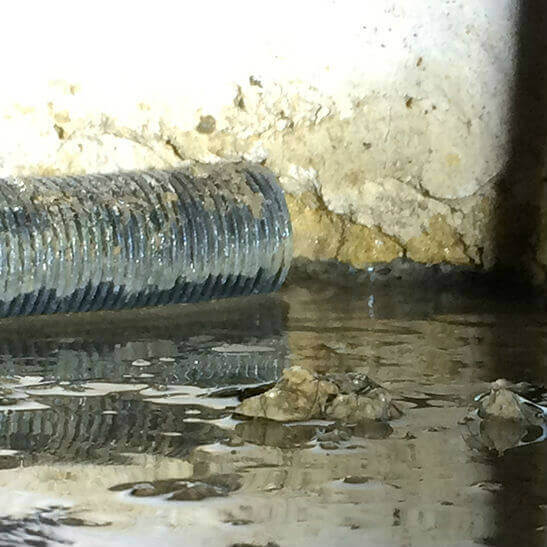
Wet rot is commonly found in areas where waterproofing has failed or ventilation is inadequate. It can also often appear where there are leaks from plumbing or domestic appliances.
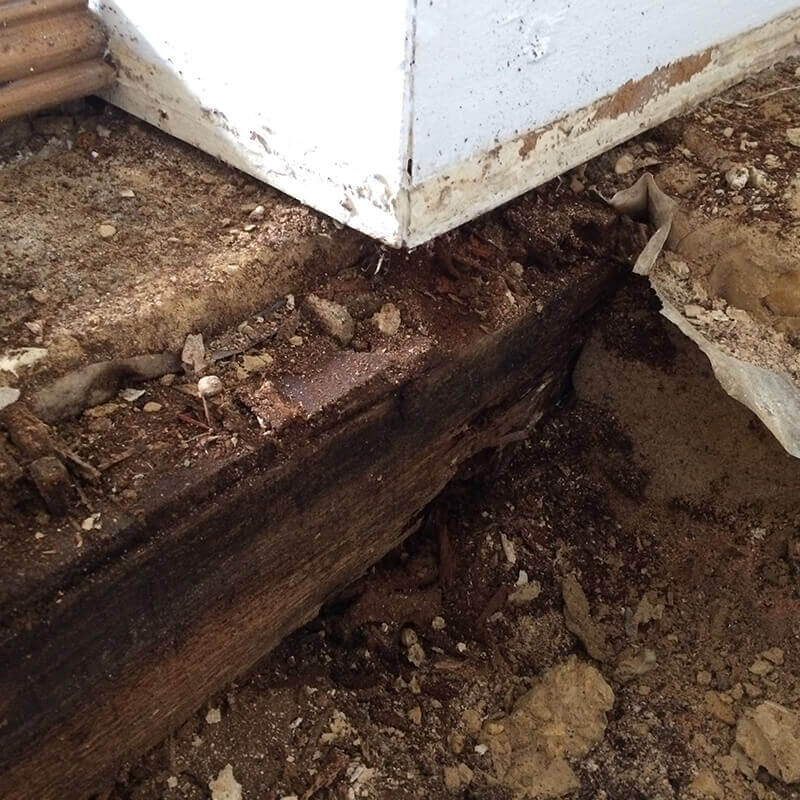
Similar to dry rot – wet rot causes wood to become weak and fragile, and look visibly degraded.
If you have concerns about the timber in your home, our professional building surveyors can complete a damp and timber survey on your property to check for issues and provide expert, long-lasting solutions.
The fruiting bodies of wood-decaying fungi can produce large amounts of microscopic spores, which, when dispersed by air circulation, can affect damp, untreated timber. These spores infect the untreated timber by pushing out a hollow tube, which grows and branches to form a mass of hyphal threads called Mycelium. This continues to develop within the timber, breaking down the wood for food. The timber will usually darken in colour and develop a cracked-like appearance. Eventually, the timber will lose its strength and stability and, in some cases, become unsafe.


Protecting your home against possible outbreaks is strongly recommended. To help prevent wet rot, it is advisable to ensure that all external timbers, including doors and windows, are protected from rainwater. One must also undertake regular maintenance and the re-application of timber preservatives and paints to ensure sufficient protection against adverse weather conditions.
Other recommendations include: periodic checks to gutters and downpipes ensuring that all are free from defects and leaks; ensuring that there is sufficient sub-floor ventilation to the property, and that this remains unblocked and free from debris; and ensuring that all new timbers introduced to the property are isolated from masonry and/or damp substrates with the use of physical DPC. Where possible, it is strongly recommended that any replacement structural timbers are installed using pressure treated timber.
Specialist timber treatments should be carried out in strict accordance with the PCA Code of Practice for Remedial Timber Treatment by an experienced and qualified technician.
Biocraft South West use specially formulated preservatives that allow for the successful eradication of wet rot. To arrange a survey of your property or for further information regarding timber decay contact us today. We cover Wiltshire, Somerset, Oxfordshire and Gloucestershire.