A Guide To:
Identifying, Treating, and Preventing Dry Rot & Wet Rot.
To start – what is dry rot and wet rot?
Dry rot and wet rot are forms of fungal decay found within timber. Whilst they develop through different causes, both dry rot and wet rot cause timber to turn brittle by breaking down the fibres of the wood. This affects the overall structural integrity, leading into potential collapse and damage to your property.
It is commonly believed that the treated timber used in modern homes cannot be affected by wet or dry rot. However, this is incorrect. Whilst modern building materials are treated and less likely to be affected by decay caused by fungus or wood boring insects such as woodworm, this does not mean they are impervious.
There are a few key ways to identify a wet rot and dry rot in your home, and it is very important that you notice these before it turns into a serious structural hazard.
At Biocraft South West, we are specialists in diagnosing and applying treatments that solves the immediate issue whilst also preventing its return. If you are looking to discuss concerns about timber decay in your home, our team offers professional advice and support to protect your home or business. Visit our contact us page to find out more.
What Are The Signs Of Wet Rot?
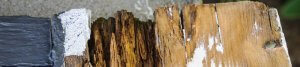
Wet rot is the more common of the two types of timber decay caused by fungus. Wet rot occurs when timber is exposed to excess moisture over a continuous period.
Fortunately, even though wet rot is more common, it is less dangerous and easier to treat. Wet rot also typically stays localised to the exact area where excess moisture is present – such as leaking pipes, blocked gutters or damp masonry caused by penetrating damp.
Here are a few key signs to look for if you suspect there is wet rot in your property:
- Damp/Musty Odour
Without checking for any other symptoms that may require a closer inspection, detecting an earthy, decaying scent can be the first sign of wet rot. The smell is often described as being like wet soil or rotting vegetation. - Change in colour
Fungus may cause discolouration, causing timber to appear darker or lighter than the wood surrounding it. - Cracked or shrunken appearance.
As the fungus destroys the timber’s structural integrity, it will begin to split across the grain and warp. - Soft or spongy feel
Similarly, wood with wet rot will be easy to destroy when poked or pressed. If you suspect there is wood rot within a piece of timber, you can use a blunt tool such as a screwdriver to test its integrity. - Damaged paintwork
Painted wood such as skirting boards or frames may hide the issue initially, but the paint will begin to flake and peel away – revealing the softened and damaged wood beneath. - Localised fungal growth
Wet rot does not tend to spread like dry rot does, but there is a chance for small patches of fungus to sprout on the damp timber.
Some of these signs are not necessarily indicators of wet rot. Other related issues such as woodworm could be the cause of these problems. However, it is best to exercise caution and take the correct steps to investigate to protect your property. This may include getting a specialist timber survey.
What Are The Signs of Dry Rot?
Despite its name, dry rot is still caused by excess moisture. Dry rot is incredibly destructive and more serious than wet rot. If you suspect it within your property, it needs to be diagnosed and treated as soon as possible.
The difficulty with dry rot is that it will spread by sending spores through plaster and brick to seek out new timber. This can result in further decay elsewhere in your property even if the initial area has been treated – this is why it’s vital to contact a timber preservation specialist if you notice any signs of dry rot.
This includes:
- Cuboid shaped cracks
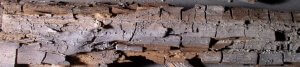
This is a very distinct symptom of dry rot. Affected timber will shrink and crack across the grain, forming into brick-like or cube shaped chunks. - Fungal growth and mushrooms
Where the humidity is highest, you may spot various growing fungus. Most common is a greyish fungus with white and yellow spots, or white strands that look like cotton wool. If the fungus is mature enough, it will sprout mushrooms – indicating the dry rot has been present for an extended period. - Spore dust
If there is fungus present, then a concentration of fine dark orange or brown dust on may appear on surfaces. This indicates the fungus is active and releasing spores to continue growing. - Musty odour:
Similar to wet rot, there is a distinct smell associated with dry rot – typically that of a damp cellar, or mushrooms. If you cannot spot any of the other symptoms but notice a smell, then it’s important to investigate further.
Dry rot’s symptoms present more clearly than those of wet rot. It is less likely that these signs can be associated with other timber decay issues; as such you should get these investigated via a timber survey as soon as possible.
Is Wet Rot or Dry Rot Hazardous To My Health?
The fungus associated with wet and dry rot is not inherently dangerous to human health, but excessive damp or moisture in your home is known to present respiratory risks to people who already experience breathing issues, have hay fever or asthma.
The biggest danger associated with wet rot and dry rot is the threat to the structural integrity of the building. Dry rot and wet rot will destroy the timber if left untreated, leading to the collapse of wooden floorboards or supports. As you cannot guarantee the timeline of how fast timber will decay, it is a huge risk to live or work within a building that has wet or dry rot.
What To Do if I Suspect Timber Decay in My Property?
The most important thing to do is not panic. Whilst all forms of timber decay need immediate treatment to prevent further damage and catastrophic structural issues, there are solutions and professional treatments that can fix the immediate problem whilst ensuring the wood is protected for the future.
The first step is to get a professional wood or timber survey from a specialist such as Biocraft South West. Our team of expert surveyors can provide a full inspection of the timber in your property to check for signs of timber decay and ensure the right treatment is suggested for the variety of fungus discovered.
There are commercially available solutions for treating dry rot and wet rot, however these are often not as effective as professional treatment that is available to licensed professionals. Treating only the fungus also does not address the underlying cause, which will need to be resolved to prevent the decay from returning.
It is highly recommended to work with a timber preservation specialist as they can provide the most effective solution.
Speak to Biocraft South West about Suspected Timber Decay
At Biocraft South West, we are one of the Southwest region’s leading specialists when it comes to handling damp and wood rot. Our expert team can provide surveys, treatment and fix the underlying cause to ensure your property is protected for the long-term.
Contact our team today for more information – we are always happy to help.